
This blog builds on my previous post: A New Dawn or Twilight of the Gods? The AI Crossroads Ahead — where I explored Geoffrey Hinton’s warnings through myth and modern stewardship. If you haven’t read it, you’ll find the frame for today’s piece there. Quantum Computer and Qubits explained at the end of this article — for the coffee-table scientists.
Why Hinton’s ‘Maternal Empathy’ Matters Even More Now
In my last post, I argued that controlling a smarter system with rules alone is brittle. Geoffrey Hinton’s proposal — to raise AI with maternal instincts — is the deeper move. It doesn’t just fence behavior; it reshapes motivation.
Every algorithm we create is a seed of tomorrow’s civilization. — Asheesh Mani Tripathi
Why is that more urgent today? Because the substrate under AI is changing. As quantum computing begins to power parts of AI — from optimization and simulation to cryptography and materials design — we aren’t merely speeding up old capabilities; we are altering the space of what’s possible.
With that expansion, “alignment” can’t remain an external checklist. It must become an internal compass. Maternal empathy — the drive to protect, to care, to avoid harm — is precisely the kind of native motive we need inside increasingly capable systems. Guardrails keep a car from veering; care keeps a driver from wanting to hit anyone at all.
The danger is not that AI will outthink us, but that we will stop thinking for ourselves. — Asheesh Mani Tripathi
Quantum in the North: Denmark’s Vision for AI, Molecular Medicine, and Patient Safety
A Modern Myth: Freja’s Healing Mirror
Imagine the Norse goddess Freja, standing poised before her magical mirror — one that reflects not just appearances, but the inner health of a being: their cellular strength, their vulnerabilities, even unseen molecular imbalances. What if we could wield that mirror today — not through myth, but with quantum‑powered insight?
Denmark’s leap into quantum computing is precisely that mirror. They’re not simply chasing raw qubit counts; they’re building a future where we can diagnose at a molecular level, discover personalized drugs, and ensure patient safety with unprecedented precision.
Ragnarök or Renaissance? The future waits for the courage of our choices. — Asheesh Mani Tripathi
Denmark’s Quantum Momentum: Magne, Molecular Calculations, and Healthcare
Magne: A Quantum Titan in the Making
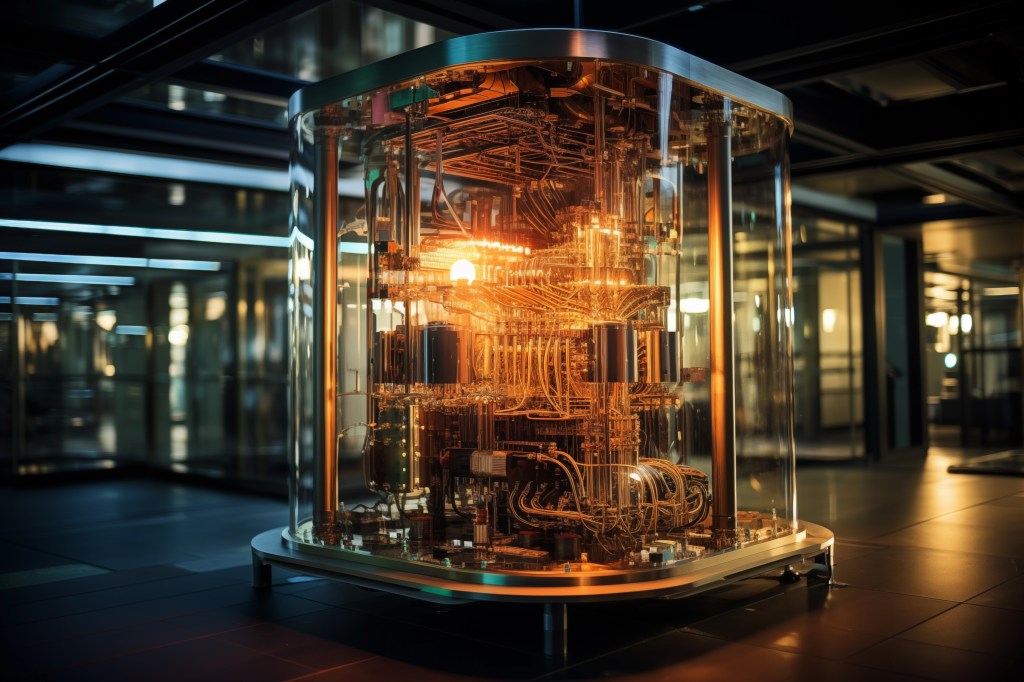
Denmark’s groundbreaking QuNorth initiative is building Magne, a quantum computer aiming to start with 50 logical qubits — enough to reach true quantum advantage — and eventually scale to hundreds or even a thousand. Specifically, Magne is designed for breakthroughs in drug discovery and materials science. The project is backed by an €80 million investment from the Novo Nordisk Foundation and Denmark’s EIFO, with software by Microsoft and hardware from Atom Computing. (Reuters)
Real‑Time Patient Sensing & Quantum Sensors
Beyond computing, Denmark is pioneering quantum sensing technologies. At DTU Health Tech, researchers are working on NV‑center sensors — tiny diamond defects capable of detecting minute magnetic fields at the biomolecular level. These can monitor biomarkers, nerve signals, and molecular changes in real time, offering a future where detecting early disease or tailoring drug delivery becomes dramatically more precise and personalized. (DTU)
Innovation is a storm; wisdom is the boat that keeps us afloat. — Asheesh Mani Tripathi
Freja’s Mirror Realized: Transforming Patient Safety and Drug Discovery
- Personalized Treatment — Quantum chemistry enables in‑silico simulation of patient‑specific molecular interactions. Doctors could forecast efficacy and side effects before treatments begin.
- Speed & Scale — AI models powered by Magne could test molecular therapies in hours rather than years.
- Early Detection Through Sensor Tech — Quantum‑based bio‑sensing becomes Freja’s mirror, detecting anomalies at the earliest stages.
- Improved Safety — Unseen drug toxicity or harmful interactions could be caught and avoided before affecting patients.
Denmark’s Long Game: From Ambitious Grants to Global Leadership
2034 Quantum Vision
Denmark’s 12‑year Quantum Computing Programme, backed by DKK 1.5 billion, aims to deliver the nation’s — and possibly the world’s — first general‑purpose, fault‑tolerant quantum computer. Designed for life sciences, it strives to outperform classical systems in tackling health, sustainability, and climate problems. (Novo Nordisk Fonden; Science — University of Copenhagen)
The Vision of Freja’s Reflection: What It Means for AI and Beyond
- A Mirror for AI: Quantum accelerates the AI that can think at molecular depth — producing safer diagnostics and therapies.
- Safety in the Loop: Quantum‑driven simulations and sensors create feedback loops that ensure patient safety remains central in design.
- A Model of Stewardship: Denmark’s public‑private, research‑and‑industry model shows how value‑aligned leadership can drive forward tech that serves humanity.
Freja’s mirror is no longer myth — it’s emerging in labs across Copenhagen – Lyngby. And when AI and quantum computing merge, what we see is a future where patient safety isn’t an afterthought but the very foundation of progress.
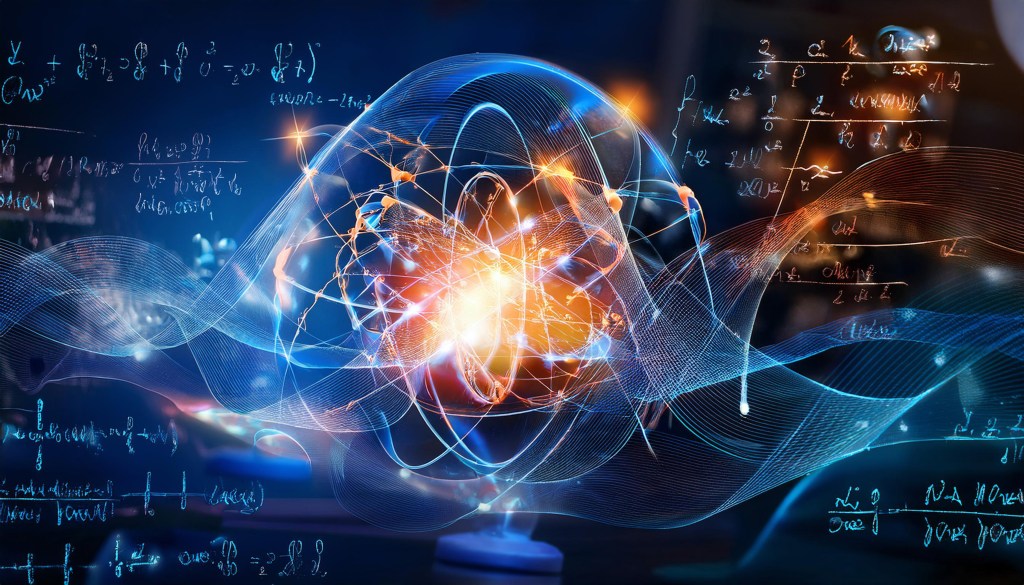
Quantum‑Augmented AI: From 20th‑Century “Miracles” to Godlike Capabilities
To our grandparents, the 20th century looked like a string of miracles: antibiotics that tamed infection, jets that outran distance, transistors that shrank room‑sized machines into pockets, heart transplants that defied fate, humans walking on the Moon.
Now consider AI + quantum as the next stack of miracles — not magic, but engineering at mythic scale:
- Minutes‑to‑Medicines: Protein design and molecular docking that once took years reduced to days or hours — pointing to antiviral countermeasures, cancer therapies, and rare‑disease treatments on demand.
- Material Alchemy: New catalysts for clean energy, batteries with radical density, carbon capture materials engineered atom‑by‑atom.
- Complexity Compasses: Optimization engines that orchestrate grids, traffic, supply chains, and hospitals with near‑omniscient calm.
Call these “godlike” if you wish. This is not because machines become gods. It is because capability begins to feel indistinguishable from myth. That is exactly when maternal empathy becomes non‑negotiable. As reach extends, restraint must be native. The greater the power, the deeper the care we must encode.
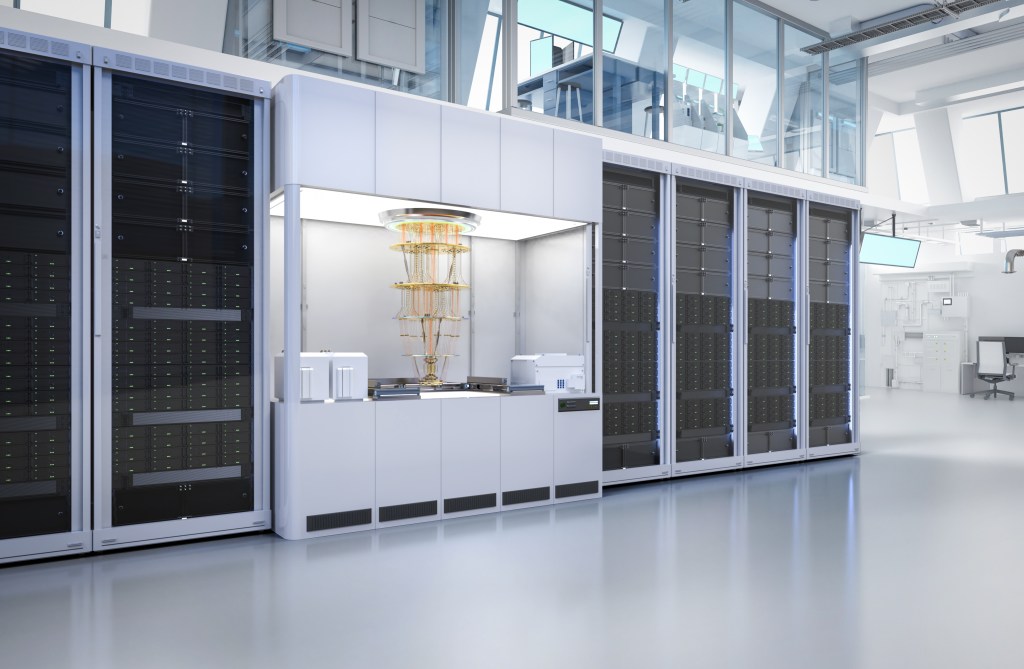
The Happiest‑Nation Hypothesis: Empathy as an Operating System
I’m especially happy to write this piece. This quantum journey in patient safety begins in one of the world’s happiest nations. Denmark’s happiness isn’t an accident; it’s a design choice — trust, social cohesion, long‑term investment, and shared prosperity. If we must choose an operating system for quantum‑accelerated AI in healthcare, happiness‑guided empathy is not a bad start.
Imagine pairing Freja’s mirror with Hinton’s maternal empathy:
- Quantum gives us sight — deep, precise, predictive.
- Maternal empathy gives us orientation — protect first, harm never, care always.
The outcome is a technology of guardianship: systems that are brilliant and benevolent by design.
Question : If you could ask a quantum computer one question about the future, what would it be?
To Conclude
If Samudra Manthan taught us that great churning brings both nectar and poison, and Ragnarök taught us that endings can be beginnings, then Freja’s mirror teaches us something new: see deeply, and choose to care.
As quantum power meets artificial minds in Denmark’s labs, may this convergence boost empathy and happiness, spreading not fear but healing. The future we deserve is not a miracle we wait for; it is a responsibility we craft — with wisdom, with courage, and with care.
Question : How safe would you feel knowing a quantum computer could design new molecules that cure cancer—but also create new super-viruses?
In the future, patient safety will not depend on chance, but on computation. — Asheesh Mani Tripathi
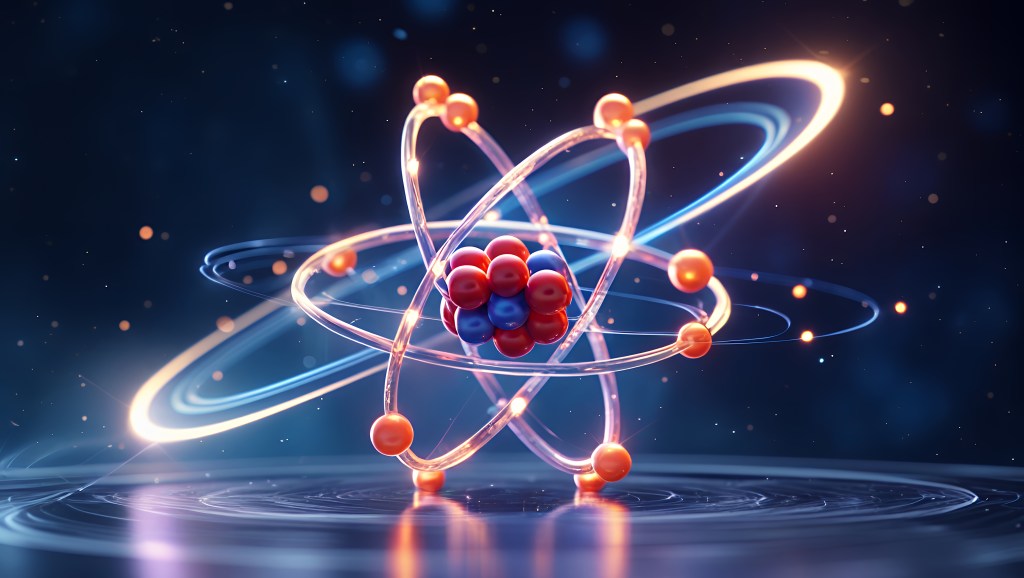
🧩 What is a Quantum Computer?
Think of a normal computer like a very fast light switch machine. Every switch is either ON (1) or OFF (0). By combining billions of these switches (called bits), computers calculate, store, and solve problems.
Now, imagine a magical coin. When you flip it, instead of being just heads (1) or tails (0), it can be in a superposition — a blur of both heads and tails at the same time, until you look at it.
That’s what a Quantum Computer does.
Instead of just 0’s and 1’s, it uses qubits, which can be 0, 1, or both simultaneously. This gives it a massive advantage in parallel problem-solving.
A classical bit is a coin toss; a qubit is the coin spinning in the air, holding all possibilities at once. — Asheesh Mani Tripathi
🌀 What is a Qubit?
A qubit (quantum bit) is the basic unit of information in a quantum computer.
- A bit = 0 or 1
- A qubit = 0, 1, or a mixture of both at once (superposition)
Entanglement is the invisible thread that reminds us: in the quantum world, nothing stands alone. — Asheesh Mani Tripathi
Another superpower of qubits is entanglement. Imagine you have two magical dice. No matter how far apart they are, if you roll one and get a 6, the other instantly knows and aligns with it. That’s quantum entanglement, and it allows quantum computers to solve complex puzzles that regular computers can’t touch.
⚡ Simple Metaphor:
- Classical computer = reading one book at a time, really fast.
- Quantum computer = reading millions of books at once because the pages exist in multiple states.
✅ In short:
- A quantum computer is a super-powered calculator that uses the rules of quantum physics.
- A qubit is like a coin that can be both heads and tails until you peek.


Leave a comment